By Papabearz
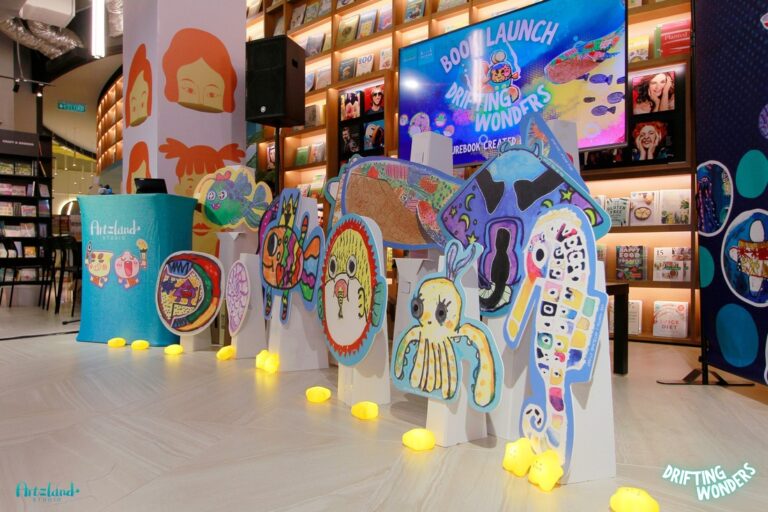
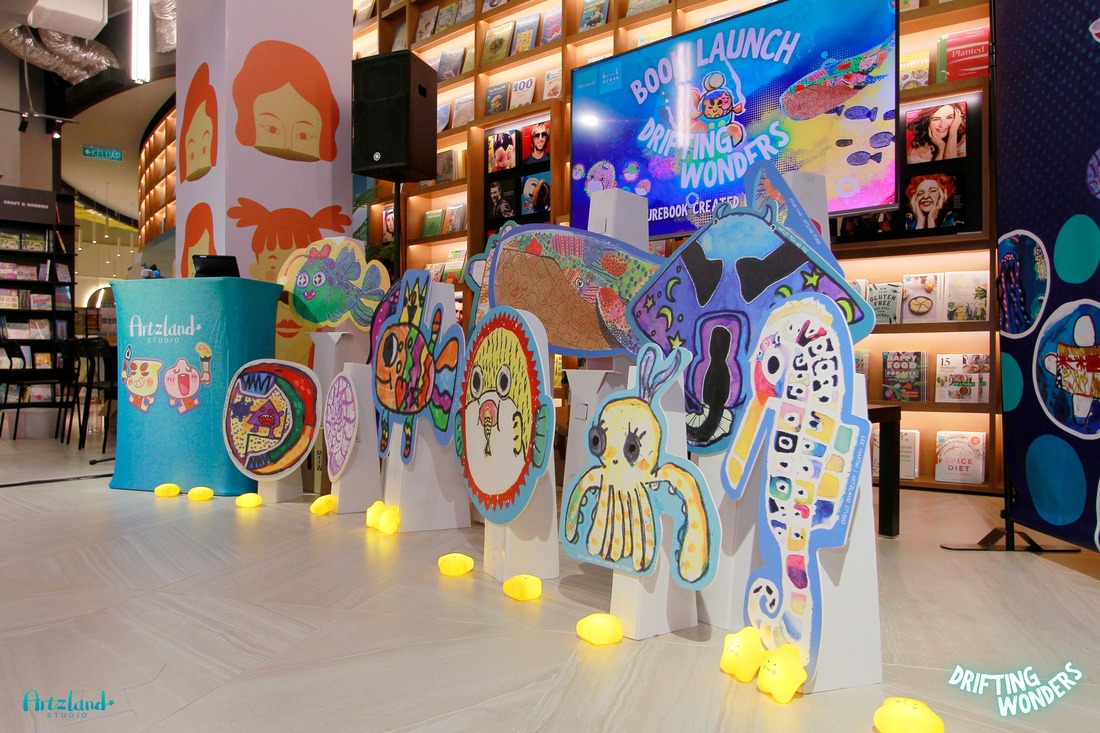
KUALA LUMPUR — On a quiet weekend morning at a bookstore launch, the crowd wasn’t there for celebrity authors or international bestsellers. Instead, the spotlight fell on a group of children — wide-eyed, nervous, and clutching pens as if they were swords. Their creation, a picture book titled Drifting Wonders, is not only a collection of illustrations and stories, but a statement: children, given the freedom to create, can produce art that resonates far beyond their years. It is also a reflection of what happens when an art class focuses on imagination rather than imitation.
A Classroom Without TemplatesAt the heart of Drifting Wonders lies a radical philosophy. Artzland Studio, the educational hub behind the project, rejects the long-held practice of teaching art through strict copying. In every artzland art class, the emphasis is not on producing identical results, but on nurturing each child’s unique vision.
“Children aren’t meant to be copy machines,” said Flynn, one of the studio’s instructors and manager of the USJ branch. “We want them to understand that their marks, their quirks, their voices — those are what make their art valuable. Drifting Wonders is a showcase of that belief, and it is born out of the daily practice of our art classes.”
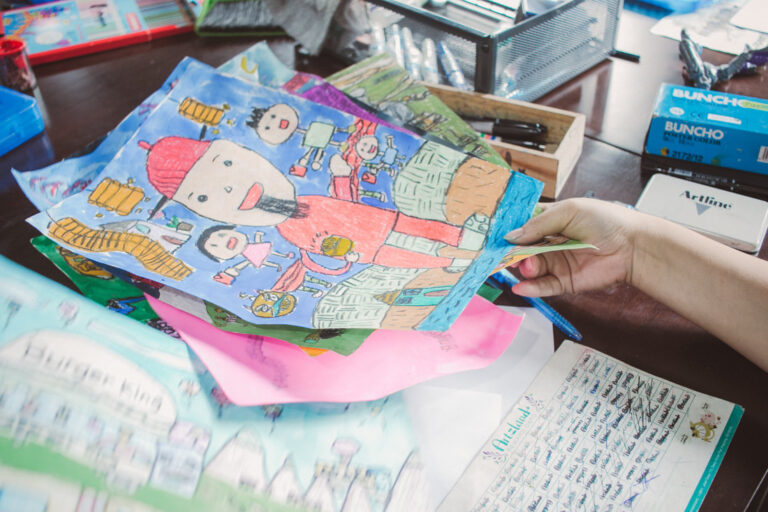
The project began not with a publishing deal, but with messy sketches on the classroom tables. Students as young as seven experimented with crayons, watercolors, and ink, guided gently but never directed. Over time, these rough drafts evolved into a cohesive work — an extension of the freedom they had in their artzland art classes.
“Children aren’t meant to be copy machines,” said Flynn, one of the studio’s instructors and manager of the USJ branch. “We want them to understand that their marks, their quirks, their voices — those are what make their art valuable. Drifting Wonders is a showcase of that belief, and it is born out of the daily practice of our art classes.”
The project began not with a publishing deal, but with messy sketches on the classroom tables. Students as young as seven experimented with crayons, watercolors, and ink, guided gently but never directed. Over time, these rough drafts evolved into a cohesive work — an extension of the freedom they had in their artzland art classes.
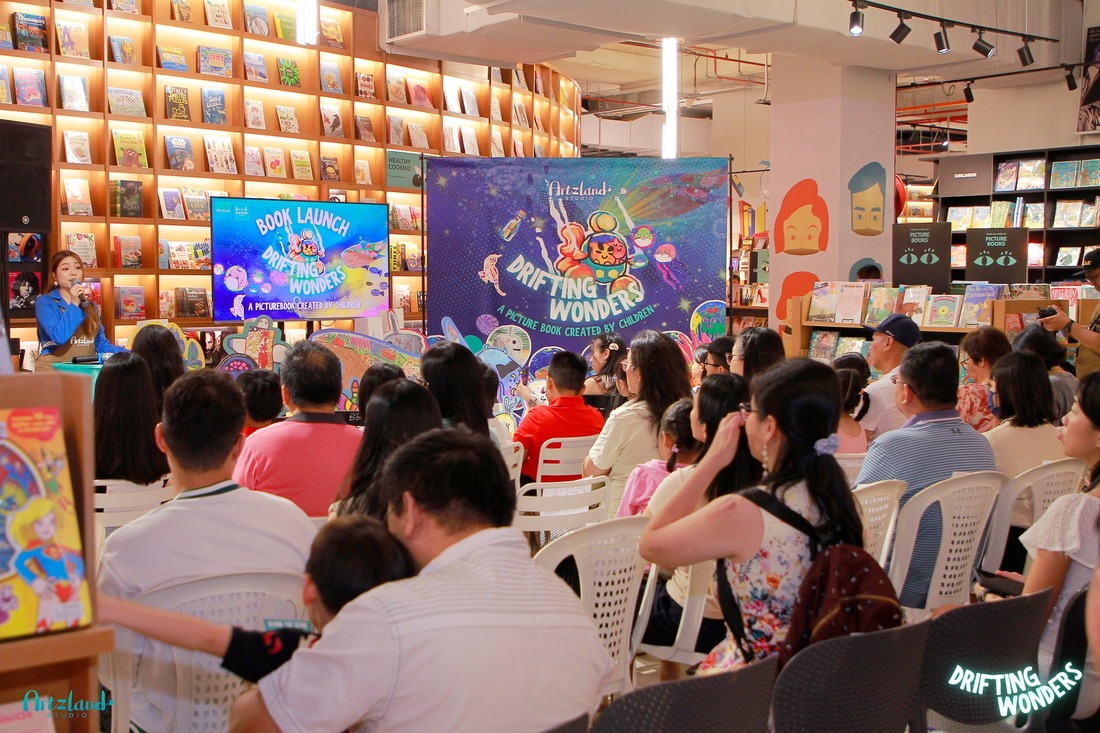
Voices From the LaunchAt the launch event, parents filled the aisles, cameras poised, many holding back tears. For them, the book was more than a keepsake — it was proof that their children’s ideas mattered, and that time spent in an artzland art class had given them confidence.
“I’ve always told my daughter that her imagination is special,” said one of the parent, whose nine-year-old contributed a two-page spread. “But seeing her art in a published book… I don’t think I’ve ever seen her so proud of herself. It shows that what she learns in her art class is more than drawing — it’s self-expression.”
The pride wasn’t limited to families. Teachers, too, reflected on the transformative journey.
“I’ve always told my daughter that her imagination is special,” said one of the parent, whose nine-year-old contributed a two-page spread. “But seeing her art in a published book… I don’t think I’ve ever seen her so proud of herself. It shows that what she learns in her art class is more than drawing — it’s self-expression.”
The pride wasn’t limited to families. Teachers, too, reflected on the transformative journey.
|
|
|
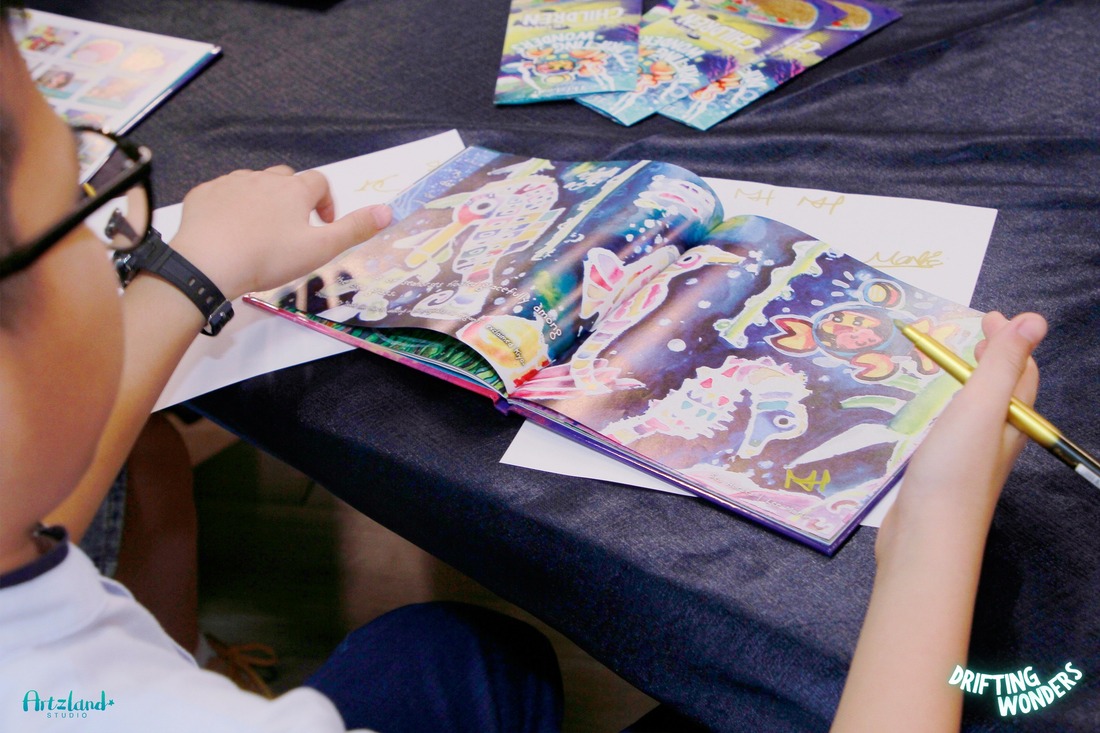
Even the young authors themselves, though shy, understood the magnitude of their achievement. “I wanted to draw something no one else thought of,” said one of the participant, flipping through his page. “It feels like my ideas are real now.”
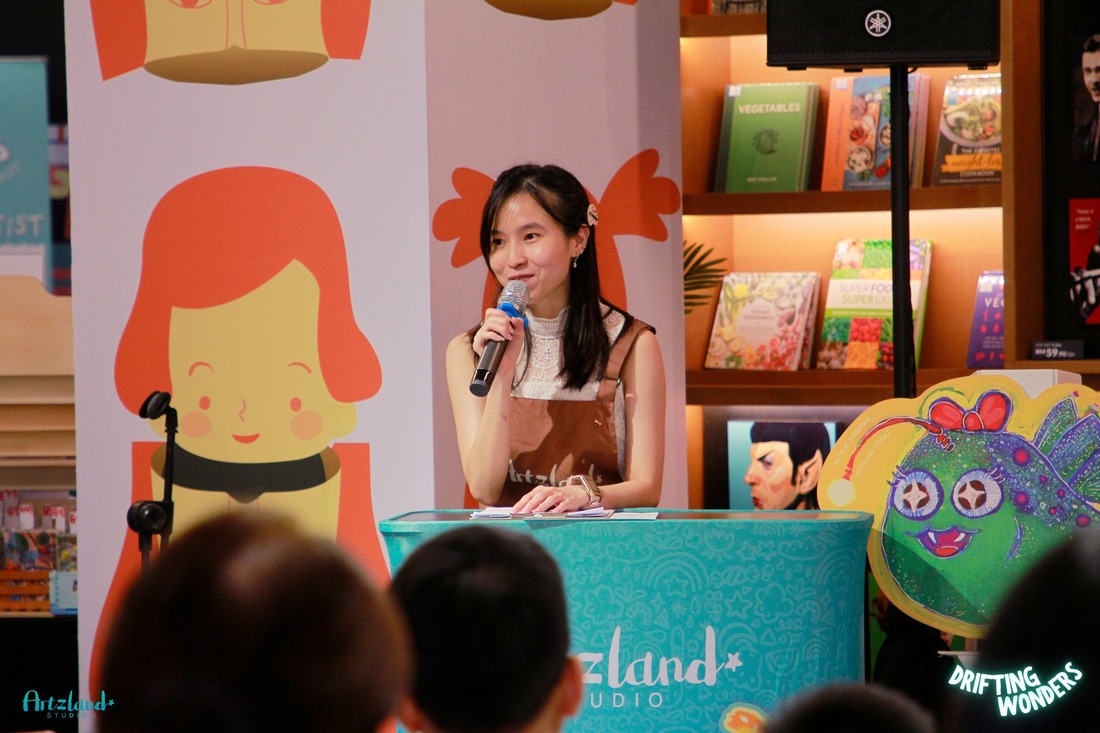
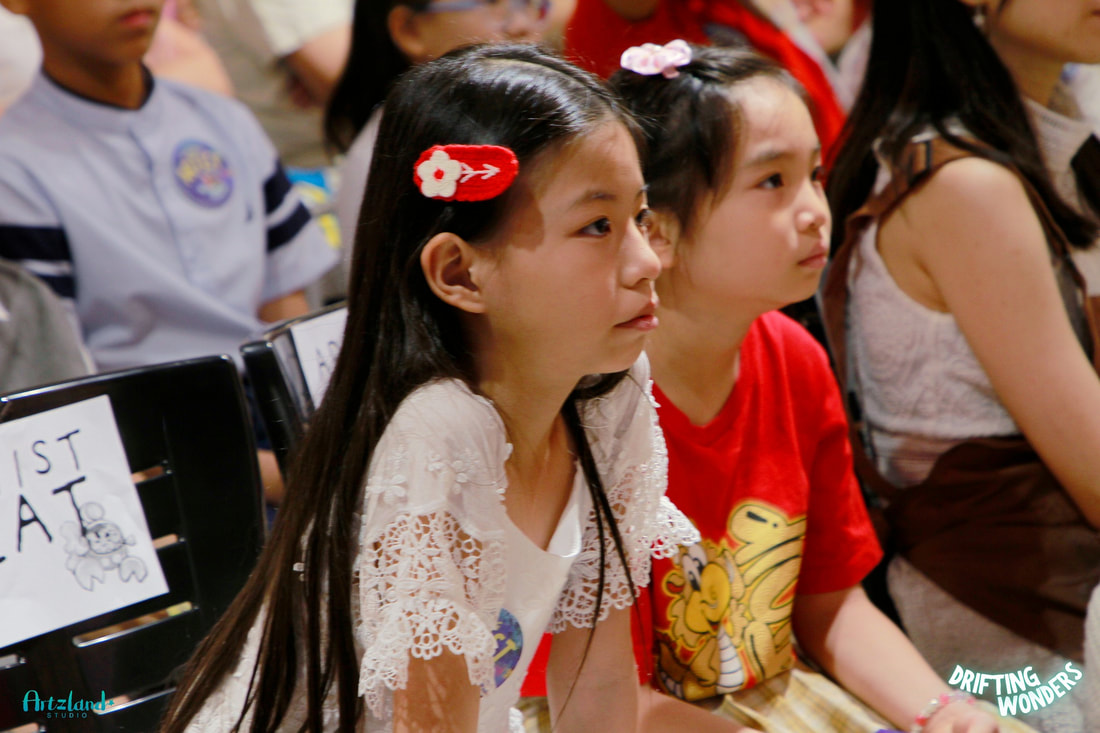
Speech by Teacher Flynn, from Artzland USJ
Beyond the launch, Drifting Wonders has sparked conversations about what education should look like in Malaysia and beyond. In a system that often prizes exam results over creativity, Artzland Studio’s art classes offer a counter-narrative: that unstructured, student-led learning can produce remarkable results.
“This is about more than art,” said Malerie Teoh, co-founder of Artzland. “It’s about teaching kids to trust their voices. When they believe their ideas have value, that confidence carries into every aspect of life — and that’s why our art classes matter.”
“This is about more than art,” said Malerie Teoh, co-founder of Artzland. “It’s about teaching kids to trust their voices. When they believe their ideas have value, that confidence carries into every aspect of life — and that’s why our art classes matter.”
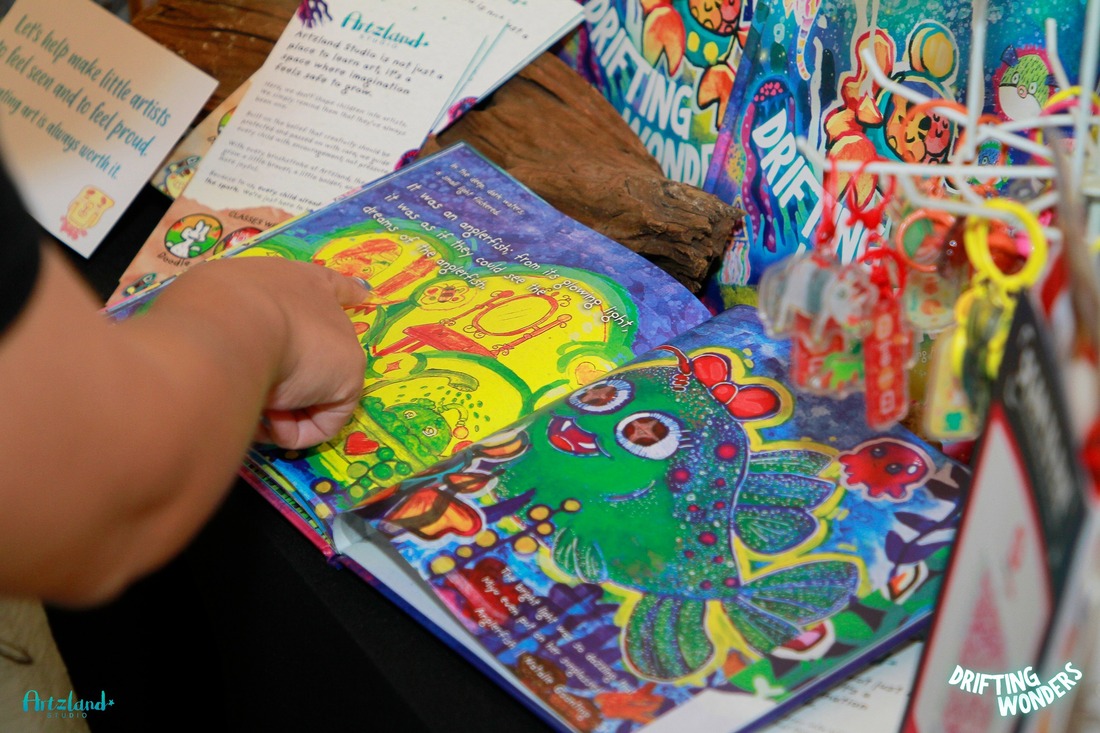
Kid’s Art turn into picturebook. Drifting Wonders.
The Book as Artifact
Unlike polished children’s books created by professional illustrators, Drifting Wonders is raw. Some drawings are lopsided; others burst with color that ignores traditional composition. But this, say its creators at Artzland Studio, is precisely the point.
“It’s not about perfect lines or shading,” Flynn explained. “It’s about honesty. Every page feels alive because it came directly from the child’s imagination, untouched by adult corrections. That’s what we encourage every week in our artzland art classes.”
The physical book itself carries weight — not only in its pages but in its symbolism. Each copy stands as a reminder that art is not the sole domain of professionals, but can emerge from any child given the right art class environment.
Unlike polished children’s books created by professional illustrators, Drifting Wonders is raw. Some drawings are lopsided; others burst with color that ignores traditional composition. But this, say its creators at Artzland Studio, is precisely the point.
“It’s not about perfect lines or shading,” Flynn explained. “It’s about honesty. Every page feels alive because it came directly from the child’s imagination, untouched by adult corrections. That’s what we encourage every week in our artzland art classes.”
The physical book itself carries weight — not only in its pages but in its symbolism. Each copy stands as a reminder that art is not the sole domain of professionals, but can emerge from any child given the right art class environment.
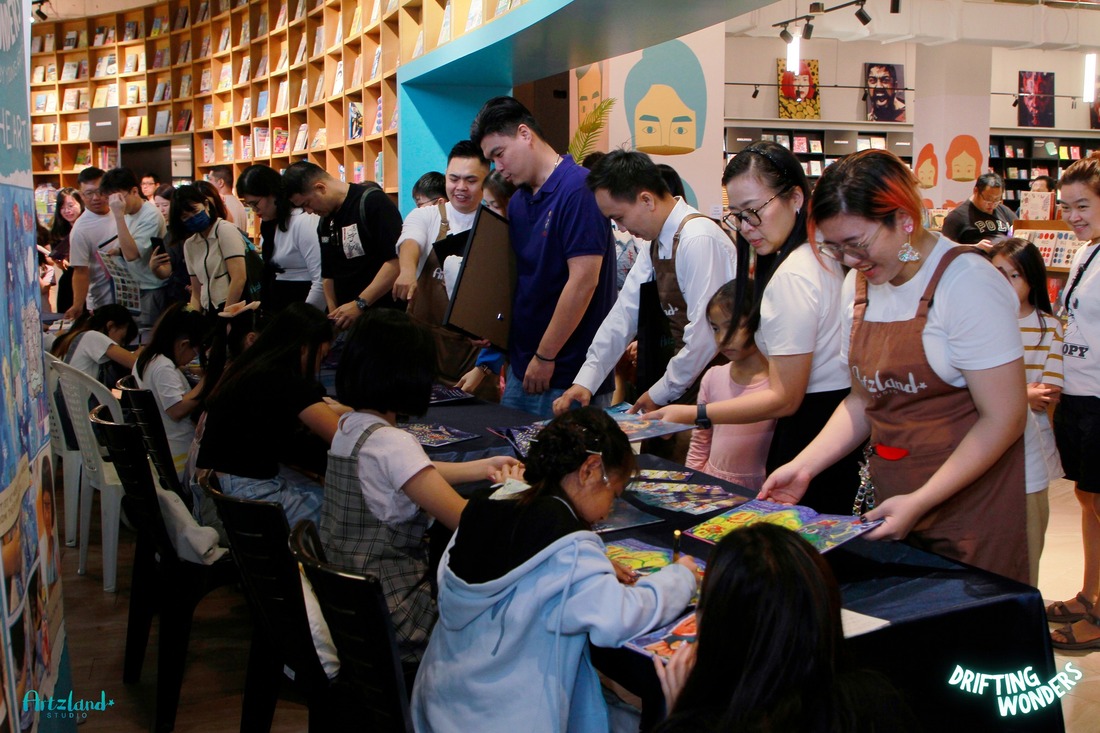
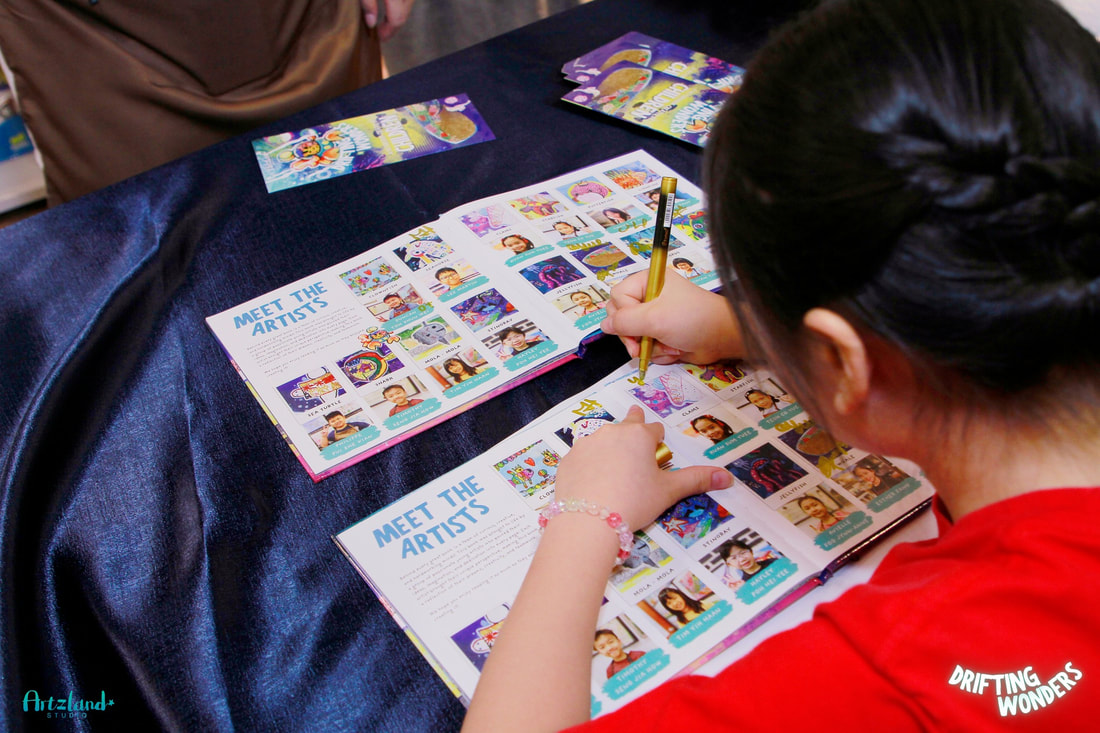
Book signing by the authors.
For Artzland Studio, Drifting Wonders is only the beginning. Plans are already underway to expand the initiative, with more student-authored books emerging directly from their art classes. There is even talk of linking future projects to community causes, channeling proceeds into book vouchers for underprivileged children.
As the final crowd trickled out of the launch, one parent paused by the display of the book. She leaned down, hugged her daughter tightly, and whispered words that echoed the spirit of both the project and the artzland art class philosophy: “I’m proud of you.”
In that moment, Drifting Wonders achieved what every book strives for — it became more than ink and paper. It became a testament to the power of believing in young voices, nurtured through the patient guidance of an artzland art class.
As the final crowd trickled out of the launch, one parent paused by the display of the book. She leaned down, hugged her daughter tightly, and whispered words that echoed the spirit of both the project and the artzland art class philosophy: “I’m proud of you.”
In that moment, Drifting Wonders achieved what every book strives for — it became more than ink and paper. It became a testament to the power of believing in young voices, nurtured through the patient guidance of an artzland art class.
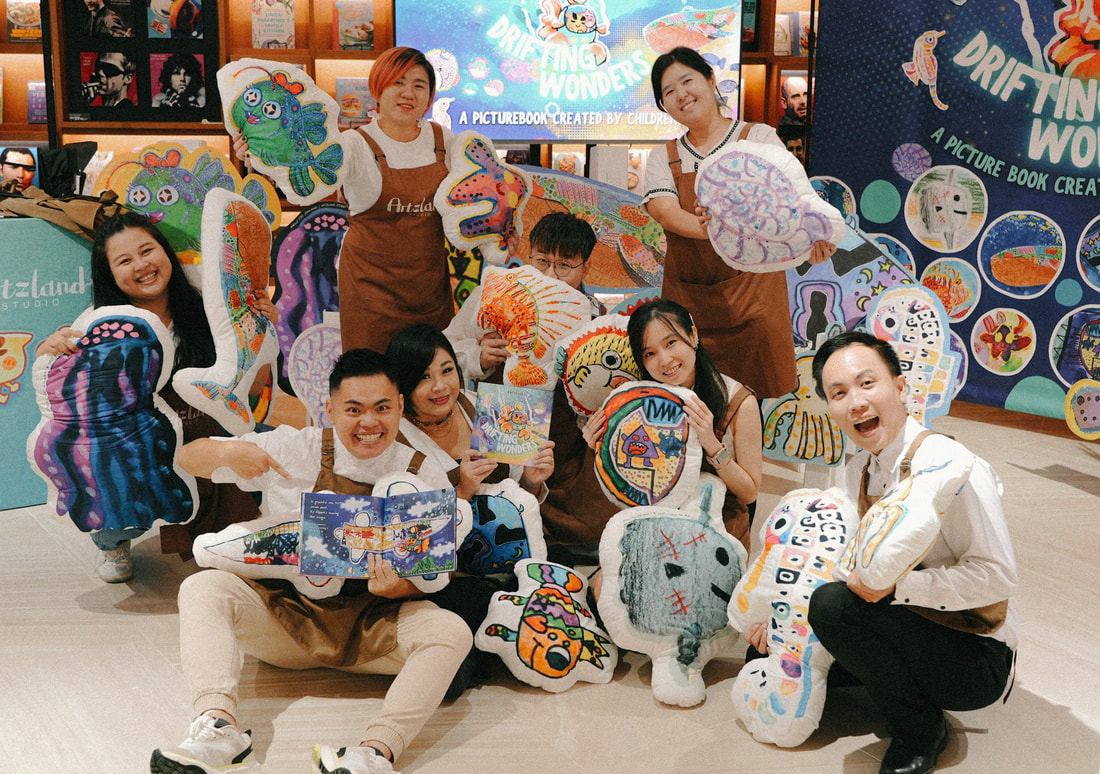
The Awesome Artzland Team behind the scene.